Yes, I'm a “Nigger Lover.”
I'm going to start this one with the sentence that somebody, somewhere, will probably use to call me racist:
Yes, I'm a nigger lover.
I've been called it before.
By a neighbor.
While I was standing in my own home.
Because I had a Black child.
And yes, before somebody gets clever in the comments:
She's my biological daughter.
So yes, somewhere along the way, I fucked a Black guy.
Once.
Or more.
Apparently that's relevant information when discussing whether my love for my own child is politically acceptable.
Welcome to America.
And welcome to one of the strangest academic experiments I never consciously volunteered to conduct.
My daughter made my whiteness visible to me.
I am a white woman.
A very white woman, actually.
Freckles. Pale skin. The whole Nordic-looking package.
And before I became a mother, I moved through the world largely without having to think about race every day.
That's what privilege looks like sometimes.
Not necessarily wealth.
Not necessarily power.
Not necessarily some sinister conspiracy where every white person is sitting around plotting how to oppress somebody.
Sometimes privilege is simply not having to notice.
You walk into a restaurant.
You don't wonder whether someone is staring at you because of your race.
You don't wonder whether the police officer approaching your car has already made an assumption about you.
You don't wonder whether your child's hair will become a classroom conversation.
You don't wonder whether another parent will allow their child to play with yours.
You don't wonder whether somebody's behavior toward you changed because they just discovered the person beside you is Black.
I didn't have to.
Then I had a daughter.
And suddenly I had a tiny Black girl holding my hand.
And the social experiment began.
Lincoln City, Oregon
We live in Lincoln City.
It's a beautiful little coastal town.
Ocean.
Trees.
Tourists.
Fog.
Rain.
Restaurants.
And, statistically speaking, not exactly a racial melting pot.
There are very few Black residents here.
Which means my daughter is often one of the only Black people in the room.
Sometimes the only one.
And I have watched something fascinating happen.
I can walk into a place alone and experience the world as I always have.
Then my daughter walks in with me.
And the room changes.
Sometimes subtly.
Sometimes not.
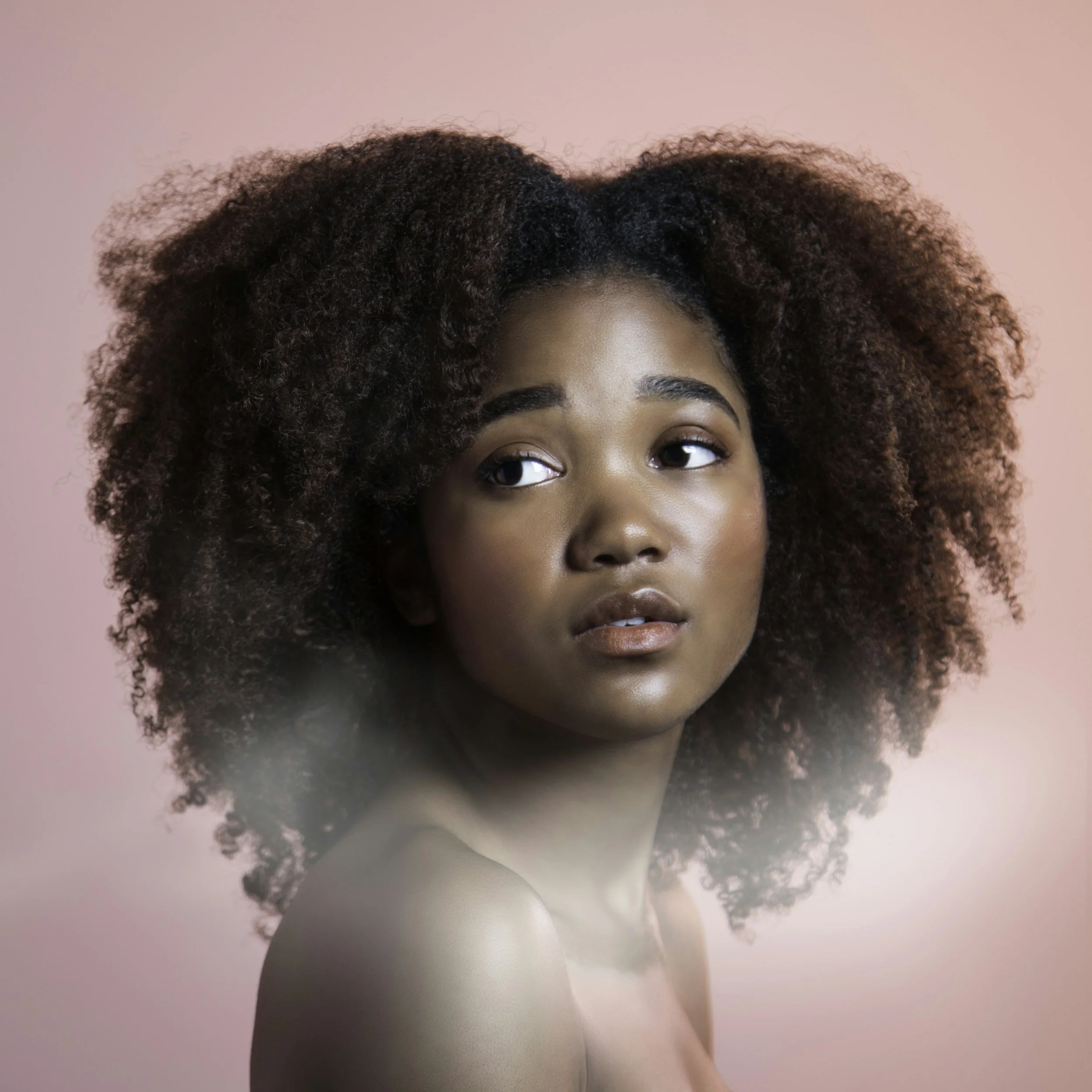
When she was a baby, she had a magnificent fro.
And I mean magnificent.
Beautiful.
Soft.
Huge.
Glorious.
Apparently also terrifying.
Because one day at a local McMenamins, another family asked the staff if they could move tables because they didn't want to sit next to us.
My daughter was a baby.
She couldn't speak.
She couldn't insult them.
She couldn't vote.
She couldn't commit a crime.
She couldn't even walk.
She was just sitting there existing with her enormous Black baby hair.
And apparently that was enough.
I remember the absurdity of it almost as much as the cruelty.
A baby.
A fucking baby.
What exactly was she supposed to have done?
The answer, of course, was nothing.
She had simply been born Black.
And then there was my neighbor.
Another time, a next-door neighbor called me a "nigger lover."
I remember the words.
I remember the shock.
I remember thinking:
Did she really just say that?
I think she regretted it afterward.
She was intoxicated—or something was clearly going on—and we never discussed it.
Eventually she moved away.
Life continued.
But here's the strange thing about racism:
Sometimes the person who says something hateful gets to forget it.
The person who hears it doesn't necessarily get that luxury.
And my daughter wasn't even the person being directly addressed.
I was.
Because I loved her.
Apparently that was enough to make me suspect.
The first time I realized I couldn't protect her from everything
My daughter cried at school one day because the paper pilgrim hat she'd made in class wouldn't fit over her hair.
That sentence sounds almost comically innocent.
It's not.
Because there is something uniquely painful about watching a child discover that an object designed for "everyone" was never actually designed with everyone in mind.
The hat was made.
The activity was planned.
The lesson was taught.
But somewhere in the process, nobody thought about her hair.
Maybe nobody meant anything by it.
That's precisely the point.
Not every form of exclusion requires an evil person.
Sometimes exclusion is simply what happens when the default human being imagined by a system doesn't look like your child.
And then there is the hair touching.
Oh, the hair touching.
Other children have repeatedly reached for my daughter's hair without asking.
Because it's different.
Because it's fascinating.
Because they've never touched hair like hers.
Because children are curious.
And children are curious.
But curiosity doesn't create ownership.
Her body is not a museum exhibit.
Her hair isn't public property.
And she shouldn't have to become an adult before people learn that.
Audre Lorde understood something I am still learning.
This is where Audre Lorde's Sister Outsider enters the conversation.
Lorde wrote unapologetically about the ways racism, sexism, sexuality, class, and other forms of difference intersect—and she rejected the idea that difference should simply be smoothed over until everyone becomes comfortably alike.
That's important to me as a white mother.
Because my instinct is sometimes to make things easier.
To say:
"She's just a kid."
"They're just curious."
"They didn't mean anything by it."
"Don't make everything about race."
And sometimes those things are true.
But they can also become convenient escape hatches.
Because intent isn't the only thing that matters.
Impact matters.
Patterns matter.
History matters.
And most importantly:
Her experience matters.
I don't need to decide that every uncomfortable interaction she has is racist.
But I also don't need to teach her to dismiss every uncomfortable interaction as meaningless.
Those are different things.
The problem is bigger than one rude family at a restaurant.
This is where Richard Rothstein's The Color of Law becomes important.
Rothstein's central argument is that American racial segregation wasn't simply the result of individual preferences or private prejudice. Government policies actively shaped residential segregation, creating geographic and economic inequalities that persisted long after the laws themselves changed.
That matters because racism isn't only about somebody saying something horrible to you.
It's also about structures.
Where people live.
Where schools are located.
How neighborhoods were built.
Who accumulated wealth.
Who had access to mortgages.
Who was excluded.
Who was welcomed.
Who was considered "normal."
Who was considered "other."
And then there's Michelle Alexander's The New Jim Crow.
Alexander argues that America didn't simply eliminate racial caste and move on.
Her thesis is far more uncomfortable: racial hierarchy was reconstructed through the criminal justice system, particularly through mass incarceration and the War on Drugs, even while the country increasingly embraced the language of colorblindness.
Different books.
Different systems.
Same uncomfortable lesson:
History leaves architecture behind.
You don't have to personally build the wall to live inside the neighborhood it created.
Here's the part I struggle with as her mother.
I know that there are things my daughter experiences that I will never completely understand.
I can't.
I don't have her skin.
I don't have her hair.
I don't have her racial identity.
I didn't grow up Black.
I grew up white.
Her biological father is Black.
And he is a man.
So even he will experience the world differently than she does.
That's the beautiful and maddening thing about identity.
Nobody gets the complete picture.
Not me.
Not him.
Not her.
We each hold pieces.
And my job as her mother isn't to pretend I understand the pieces I don't possess.
It's to listen.
To believe her.
To ask questions.
To learn.
To intervene when intervention is necessary.
And, perhaps most importantly, to resist the temptation to turn her experience into a lesson about me.
Because this isn't my racial awakening story.
It's her life.
I'm just lucky enough to be her mother.
Race and gender keep showing up in Aletheia Courses for a reason.
Some people have asked why race keeps appearing in our curriculum.
Why gender?
Why history?
Why uncomfortable books?
Why The New Jim Crow?
Why Sister Outsider?
Why The Color of Law?
Because these aren't niche subjects.
They're American subjects.
And if we are serious about understanding the United States, we cannot study American history while politely stepping around the parts that make us uncomfortable.
Race isn't an optional chapter.
Neither is gender.
Neither is class.
Neither is power.
They are threads woven throughout the fabric.
You can pull them out if you want.
But then you're no longer holding the same fabric.
And this is exactly why I created Aletheia Courses.
Not to tell people what to think about race.
Not to tell white people they're inherently evil.
Not to tell Black people what their experience should be.
Not to hand anybody a political catechism.
But to put difficult books in front of curious people and say:
Read it.
Then read something that disagrees.
Investigate the history.
Look at the evidence.
Listen to people whose experiences are radically different from yours.
And then...
Think.
My daughter doesn't need me to save her from the world.
She needs me to prepare her for it.
That's harder.
I'd love to tell her that everyone is going to love her.
They're not.
I'd love to tell her that racism is mostly a thing of the past.
It isn't.
I'd love to tell her that if she's kind, intelligent, hardworking, and good, the world will reward her accordingly.
History gives me absolutely no basis for making that promise.
But I can tell her something else.
That her Blackness is not a defect.
Her hair is not a problem to solve.
Her body isn't an apology.
She doesn't have to make herself smaller so someone else can feel comfortable.
She doesn't owe anyone gratitude for tolerating her existence.
And she does not have to become the perfect representative of an entire race.
She's just a kid.
My kid.
A brown little human being who deserves the same ridiculous, messy, complicated opportunity to figure out who the hell she is that I had.
And perhaps that's the most important lesson motherhood has taught me about race:
I don't need to know exactly what it's like to be her.
I need to care enough to know that it isn't always like being me.
So yes.
I'm a "nigger lover."
If loving my daughter means somebody gets to put a racial slur on me, fine.
I'll wear it.
Not because the word doesn't hurt.
It does.
Not because racism doesn't matter.
It does.
But because there is something almost comically pathetic about a world in which loving a Black child can be treated as a political or racial transgression.
My daughter is entering fourth grade.
She's getting older.
The world is getting bigger.
And someday, she won't need me standing beside her to explain why somebody looked at her differently.
She'll already know.
That's the part that breaks my heart.
But perhaps our job as parents isn't to create a world in which our children never encounter ugliness.
Perhaps it's to raise children who understand their own worth so deeply that ugliness doesn't get to define them.
And to build a world where the next generation encounters a little less of it.
That's the work.
That's the inquiry.
That's the discomfort.
And that's why we keep reading.
— Dr. Aletheia
