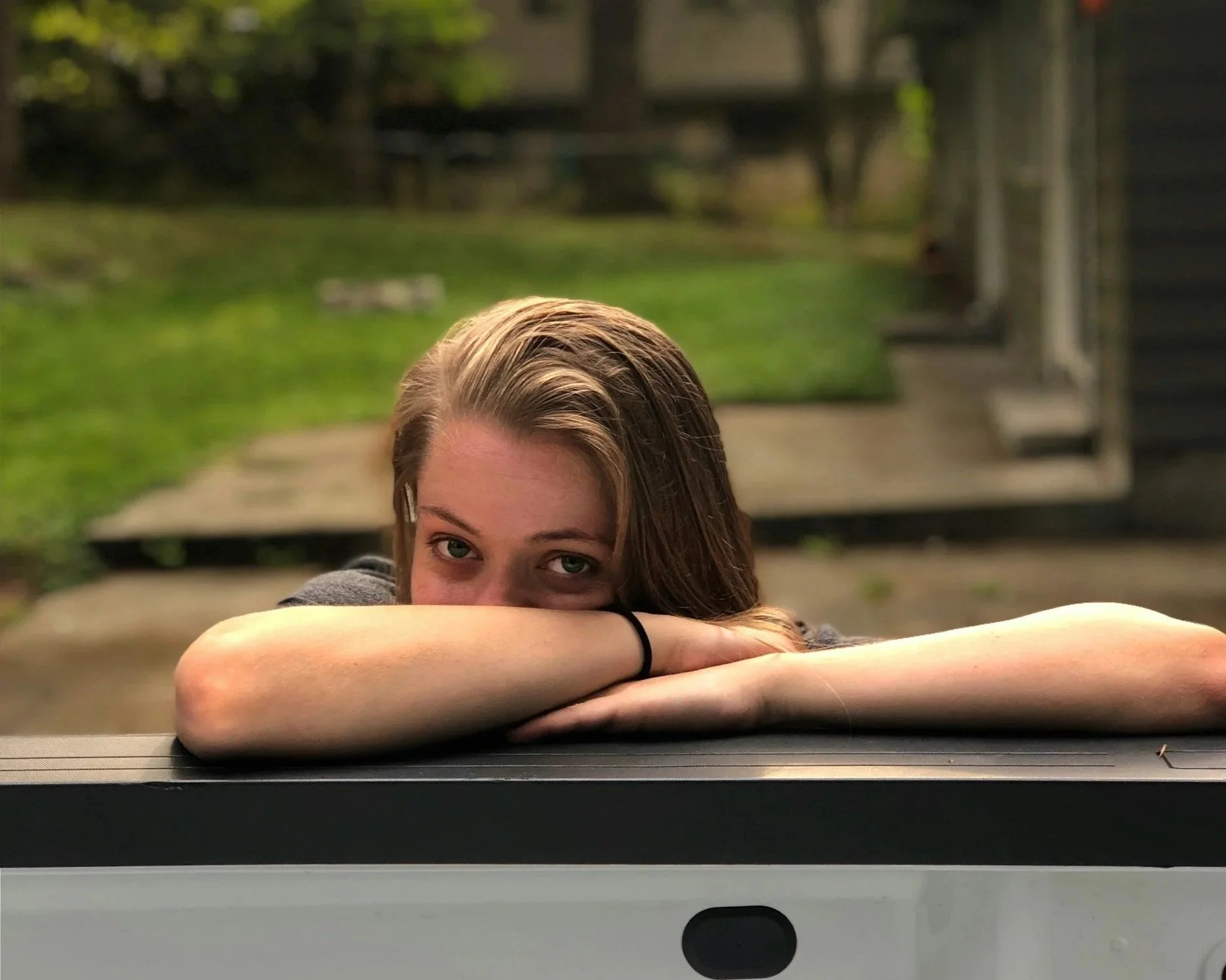
(And What I Saw That I Couldn’t Ignore)
I did not build Aletheia Courses because I had answers.
I built it because I could no longer ignore the questions.
For much of my life, I believed what many Americans are taught to believe.
That education was the pathway to understanding.
That institutions existed to cultivate wisdom.
That if you worked hard, read what was assigned, earned the degrees, and followed the established channels, clarity would eventually arrive.
So I did exactly that.
I studied.
I performed.
I collected credentials.
A bachelor’s degree.
An MBA.
A doctorate.
I learned how to research.
How to write.
How to analyze.
And yet, somewhere along the way, an unsettling realization began to surface:
We are surrounded by educated people who do not know how to think.
Not deeply.
Not independently.
Not courageously.
They know how to repeat.
How to perform intelligence.
How to inherit conclusions.
How to defend positions they have never truly interrogated.
And I realized something even more uncomfortable:
For a long time, I had done the same.
I Was Naive
I had lofty thoughts about the world.
About America.
About people.
I believed most individuals were fundamentally kind—not because they were constrained by law or fear, but because goodness was somehow our default setting.
I believed truth, once presented clearly enough, would naturally persuade.
I believed education was designed to enlighten.
Then life intervened.
Life has a way of stripping inherited assumptions down to their frame.
It reveals what was borrowed.
What was untested.
What was merely repeated.
Life kicked my ass.
And in that unraveling, I turned—not to experts, not to influencers, not to institutions—but to books.
Books became refuge.
Books became confrontation.
Books became resistance.
The more I read, the more I realized how little I understood.
The more I understood, the more urgently I needed to know.
Not what to think.
How to think.
That distinction changed everything.
Information Is Not Wisdom
We live in an age of abundance.
Too much noise.
Too many voices.
Too many pseudo-realities delivered to us in polished fragments.
We scroll endlessly.
We consume headlines.
We quote thinkers we have never wrestled with.
We mistake exposure for education.
Most people today have access to more information than any generation in human history.
And yet many seem less capable than ever of evaluating what they encounter.
That is not an intelligence problem.
It is a training problem.
Access to information is not the same as the ability to think.
And somewhere, quietly, our systems forgot that.
Traditional education has become increasingly expensive, increasingly bureaucratic, and increasingly distrusted.
Schools train compliance.
Platforms optimize attention.
Micro-learning apps promise “wisdom” in fifteen-minute summaries and bullet-point takeaways.
But wisdom is not a highlight reel.
Memorizing someone else’s distilled conclusions is not the same as wrestling with the argument yourself.
Skimming summaries may make you feel informed.
It rarely makes you formed.
Aletheia rejects intellectual fast food.
Why Books Still Matter
The CIA once referred to books as “the most important weapon of strategic propaganda.”
Sit with that.
Generations have underestimated the power of books.
Perhaps because books require something most modern systems discourage:
Patience.
Attention.
Humility.
Books slow you down.
They force you to sit inside someone else’s architecture of thought.
To confront ideas in full context.
To follow an argument to its conclusion—even when it unsettles your own.
Haruki Murakami once wrote:
“If you only read the books that everyone else is reading, you can only think what everyone else is thinking.”
Exactly.
That is why Aletheia exists.
Not to summarize books for you.
Not to spoon-feed conclusions.
Not to outsource your thinking.
You read the books.
You watch the films.
You engage the arguments.
You sit with tension.
You mark the page.
You question the assumptions.
You learn to articulate what you believe—and why.
That is education.
Why the Bible Is Included
I did not read the Bible cover to cover until I was thirty-five.
That fact still surprises people.
I grew up in church-adjacent America.
My parents married beneath stained glass.
Sundays meant pews.
Wednesday nights meant Awana.
We pledged allegiance “under God.”
We bowed our heads at dinner tables.
We watched presidents swear oaths with hands pressed against Bibles.
Christianity was everywhere.
And yet, like many people, I had inherited familiarity without true literacy.
That matters.
Because whether one believes in Scripture or not, Christianity is deeply braided into American life.
Its language shapes our culture.
Its narratives shape our institutions.
Its moral architecture lingers beneath our laws and assumptions.
You cannot fully understand Western civilization—or American history—without understanding the Bible.
That is why the first year of Aletheia includes an optional Bible reading schedule.
Not as devotion.
Not as doctrine.
Not as denominational instruction.
This is not a Bible study.
We are not affiliated with any church.
We are pursuing something else:
Context.
Intellectual integrity requires confronting the sources that shaped the world you inherited.
And too often, people outsource that confrontation to pastors, devotionals, influencers, or now—even AI.
Be cautious.
Interpretation is power.
When someone explains a text before you have wrestled with it yourself, they frame the battlefield.
Read it first.
Question it.
Argue with it.
Mark it up.
But know what it actually says.
Most people inherit their beliefs the way they inherit furniture:
Unexamined.
Unchallenged.
Rarely chosen.
This course is where that inheritance gets audited.
What I Couldn’t Ignore
I kept seeing something unsettling.
Smart people—highly educated, articulate people—being swept into whatever narrative they encountered last.
A headline.
A clip.
A charismatic voice.
A tribal ideology.
People reacting before reading.
Judging before understanding.
Outsourcing their thinking to institutions, political parties, algorithms, and increasingly, artificial intelligence.
Democracy weakens when citizens stop reading and start reacting.
Freedom becomes fragile when literacy gives way to emotional volatility.
Political violence does not emerge from nowhere.
It grows where division festers, where propaganda thrives, where people no longer know how to evaluate what they are being told.
If we care about liberty, we must care about literacy.
And literacy is not merely functional.
It is philosophical.
It is moral.
It is civic.
It is deeply human.
That is what I could not ignore.
And that is why I built Aletheia.
A Different Kind of Education
Aletheia Courses is not traditional education.
It is not institutional.
It is not passive.
It is not designed to hand you answers.
It is structured intellectual formation.
Every month, you receive a syllabus.
What to read.
What to watch.
Questions to wrestle with.
History.
Politics.
Religion.
Philosophy.
Power.
The human condition.
You will not agree with everything.
You may not even like everything.
Good.
Discomfort is the tuition of growth.
This is not for the faint of heart.
It is not easy to follow intellectually.
Or emotionally.
But real education rarely is.
Most platforms optimize for attention.
Aletheia optimizes for depth.
Those are very different outcomes.
I’m Just a Human Trying to Help Humanity
That may sound grandiose.
It is not.
It is sincere.
I am a mother.
A businesswoman.
A researcher.
A writer.
A reader.
A citizen trying to make sense of a noisy world.
I manage spreadsheets.
Coach youth soccer.
Volunteer in my community.
Sit by Devils Lake.
Draft political memoirs.
Drink French 75s with my husband in our gloriously imperfect backyard.
And sometimes, in quiet moments, ask impossible questions.
Like this one:
How do you educate a country?
I do not know.
Perhaps one mind at a time.
Perhaps by helping people remember that thinking is still possible.
That wisdom can still be cultivated.
That books still matter.
That truth is not whatever trend happens to be winning.
I built Aletheia because I needed it.
And because I suspect others do too.
Welcome
Aletheia means un-concealment.
The revealing of what was hidden.
The clearing of the window.
The fuller view.
This is not a place for passive consumers.
It is for those willing to confront assumptions.
To question dominant narratives.
To endure the friction of intellectual growth.
To become more difficult to manipulate.
To become philosophers—not in title, but in practice.
Read books.
Watch films.
Think deeply.
Be courageous enough to wrestle with reality without a chaperone.
I am honored you are here.
Welcome to Aletheia.
With Love & Logos,
Dr. Aletheia Aurelius
Founder, Aletheia Courses LLC
