Before You Study American History, You Need to Learn How to See It
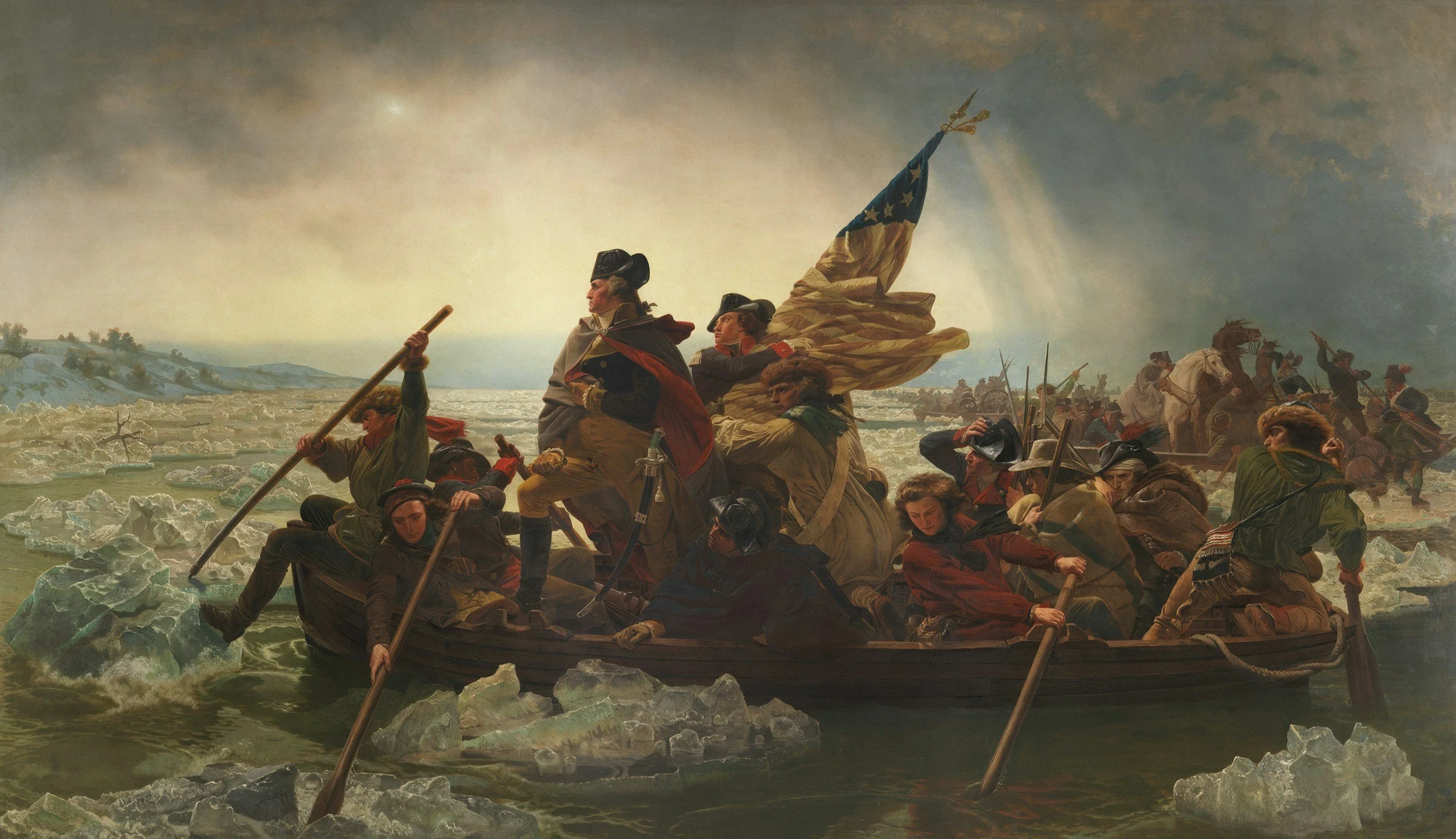
I didn't create Aletheia Courses because I thought Americans needed another person telling them what to think.
God knows we have enough of those.
I created it because I think we've forgotten how to look.
At history.
At institutions.
At power.
At religion.
At politics.
At ourselves.
And nowhere is that problem more obvious than in the way Americans learn American history.
Most of us were handed a version of the story long before we were old enough to question it.
The Pilgrims.
George Washington.
The Founding Fathers.
The Declaration of Independence.
The Revolutionary War.
The Constitution.
Slavery.
The Civil War.
Lincoln.
The Civil Rights Movement.
The moon landing.
America.
Progress.
Victory.
The End.
Except history doesn't actually work that way.
History isn't a straight line.
It is a tangled forest of competing interests, unintended consequences, forgotten people, political compromises, violence, courage, hypocrisy, idealism, greed, sacrifice, invention, oppression, resistance, failure, and extraordinary human beings doing extraordinarily human things.
And if someone hands you a clean timeline with all the ambiguity scrubbed out of it, you aren't necessarily learning history.
You may simply be learning a story.
America Is Not a Fairy Tale
I'll say something that will probably irritate somebody:
I don't think "America is the greatest country on Earth" is a sufficient education.
Not because I hate America.
Quite the opposite.
Because if you love something, you should be willing to look at it closely.
Really closely.
The claim that America is "the greatest country on Earth" isn't something history can simply prove like a mathematical equation. Greatest according to what metric?
Military power?
Economic output?
Individual liberty?
Life expectancy?
Social mobility?
Happiness?
Innovation?
Political stability?
Cultural influence?
Opportunity?
There is no single objective scoreboard for "greatest country."
And that's the point.
Patriotism can be meaningful.
But patriotism isn't evidence.
It is an emotion.
A powerful one.
And emotions deserve to be understood—not substituted for inquiry.
You don't learn American history by memorizing that America is wonderful.
You also don't learn it by memorizing that America is terrible.
You learn it by investigating what happened.
That distinction is the entire reason Aletheia Courses exists.
The First Rule: Don't Let Me Think for You
Our first course begins with Howard Zinn's A People's History of the United States.
That choice is deliberate.
It is also controversial.
Good.
Zinn challenged the traditional American narrative by moving the camera away from presidents and generals and toward workers, dissenters, activists, Indigenous people, enslaved people, and others whose experiences frequently received less attention in conventional accounts. My original Month 1 course explicitly asks readers to confront that perspective rather than simply accept it.
But here's the part I care about most:
You don't have to agree with Zinn.
In fact, I don't want blind agreement.
If you've already read Zinn, I encourage you to read his critics.
Mary Grabar.
Daniel Immerwahr.
Tad Stoermer.
Primary sources.
Different historians.
Different interpretations.
Different evidence.
The point isn't to replace one orthodoxy with another.
It's to develop the ability to recognize orthodoxy in the first place.
Because disagreement without investigation is just inherited opinion wearing a clever disguise.
And Then Netflix Gives Us Another Lens
This year, as America celebrates its 250th anniversary, Netflix released The American Experiment, a five-part documentary series examining the nation's founding and the question at the center of the American Revolution:
Can a people govern themselves?
That's a fascinating question.
Notice what it isn't.
It isn't:
"Were the Founders good guys or bad guys?"
It isn't:
"Was America born perfect?"
It isn't:
"Was America born evil?"
It's a question.
A real one.
Can human beings actually govern themselves?
The series moves through the Revolution, the Declaration, the creation of the Constitution, and George Washington's presidency, while bringing together historians and political voices from across the ideological spectrum.
That makes it particularly useful for what we're trying to do here.
Because history becomes much more interesting when you stop asking:
"Which side am I supposed to be on?"
and start asking:
"What can I learn from this?"
The Founding Was Extraordinary.
It was also Complicated.
Both things can be true.
The American Revolution was an extraordinary political experiment.
The Constitution was an extraordinary attempt to create a durable system of self-government.
The Declaration articulated radical ideas about equality and natural rights.
And the society producing those documents simultaneously contained slavery, denied women political equality, displaced Indigenous peoples, and excluded enormous portions of the population from the political community.
That isn't a contradiction we need to hide.
It's the contradiction we need to study.
Because contradictions are where history gets interesting.
A country can proclaim liberty while practicing slavery.
A revolution can expand freedom while excluding millions.
A constitution can establish a revolutionary form of government while reflecting the limitations of its own time.
A democracy can become more democratic.
That's not hypocrisy alone.
It's also historical development.
The United States is not a finished product.
It is an experiment.
And experiments are allowed to produce uncomfortable results.
This Is Why Month One Matters
Before we dive into particular wars, presidents, movements, political ideologies, religions, institutions, or revolutions, I want you to develop something more fundamental.
A historical lens.
Learn to ask:
Who wrote this?
When?
Why?
For whom?
What evidence supports it?
What evidence complicates it?
Whose perspective is missing?
What assumptions am I bringing with me?
What would change my mind?
Those questions matter more than memorizing dates.
Because once you learn how to interrogate a narrative, you can take that skill anywhere.
That's the point.
Aletheia isn't here to hand you a new ideology.
It is here to make inherited ideology harder to swallow without chewing first.
History Is Not Neutral
This is one of the uncomfortable ideas at the center of our first course.
History is curated.
Some stories are elevated.
Others disappear.
Some people become monuments.
Others become footnotes.
Some events are described as triumphs.
Others are described as tragedies.
And sometimes the difference isn't what happened.
It's who is holding the pen.
As the Month 1 course argues, historian Sam Wineburg's research suggests that people often approach history as narrative rather than evidence. That's a profound problem because narratives feel coherent even when reality wasn't.
We love stories.
Our brains crave them.
Beginning.
Conflict.
Hero.
Villain.
Resolution.
But history rarely provides such convenient architecture.
Real history is messier.
The hero may have been a villain somewhere else.
The villain may have done something admirable.
The revolutionary may become the establishment.
The oppressed may later become the oppressor.
The reformer may compromise.
The idealist may become pragmatic.
The nation may fail spectacularly—and then somehow improve.
Human beings are complicated.
So history should be too.
You Don't Need to Hate America to Study America
This may be the most important thing I want you to understand.
Criticism isn't hatred.
Questioning isn't betrayal.
Acknowledging failure isn't anti-American.
And recognizing achievement isn't propaganda.
You can hold all of those things simultaneously.
In fact, I would argue that mature patriotism requires it.
If America really is an extraordinary experiment in self-government, then we should be able to examine its failures without collapsing into existential panic.
If our founding ideals are genuinely powerful, they should survive scrutiny.
If they're not...
We should want to know that, too.
Because truth doesn't become less true because we dislike it.
And America doesn't become less American because we investigate it.
Start Here.
That's why American history is foundational to Aletheia Courses.
Not because I want to convince you that America is good.
Not because I want to convince you that America is bad.
Because before we can meaningfully discuss anything about America, we need enough historical context to understand what we're actually talking about.
You cannot intelligently debate the present without understanding the past.
You cannot evaluate political claims without knowing where they came from.
You cannot recognize propaganda if you've never learned how narratives are constructed.
And you cannot genuinely think for yourself if all of your conclusions were handed to you before you learned how to question them.
So start here.
Read.
Watch.
Compare.
Argue with the author.
Argue with me.
Change your mind.
Don't change your mind.
Just make sure the opinion you're defending is actually yours.
Because at Aletheia, that's the goal.
Not to tell you what to believe.
To make you curious enough to find out.
The truth can survive your questions.
And if it can't?
It wasn't truth you were protecting in the first place.
