Day 31: Leviticus 11-13
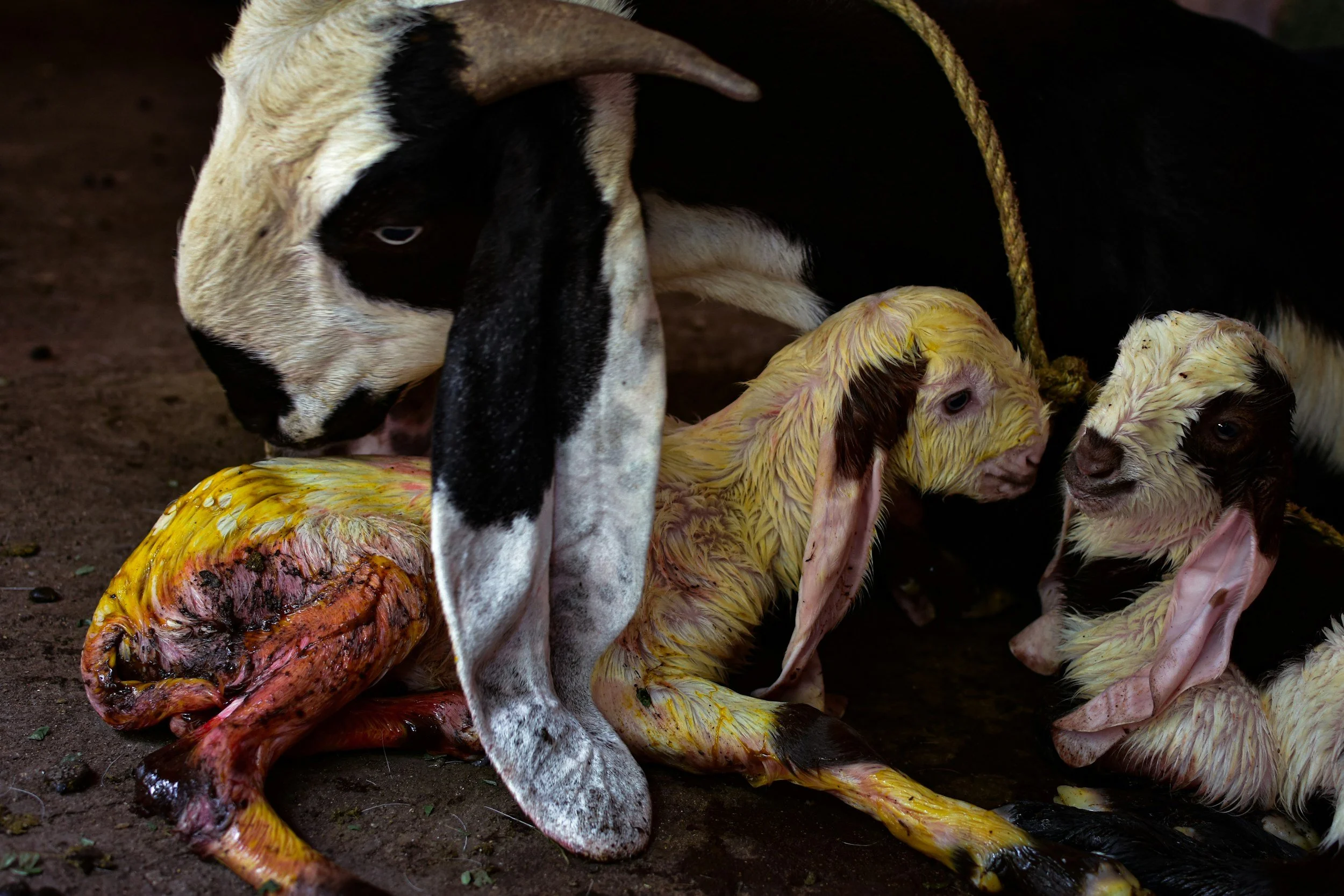
Clean and Unclean Animals, Purity After Childbirth, and Skin Diseases
Leviticus 11
1 Yahweh spoke to Moses and to Aaron, saying to them,
2 “Speak to the children of Israel, saying, ‘These are the living things which you may eat among all the animals that are on the earth.
3 Whatever parts the hoof, and is cloven-footed, and chews the cud—among the animals you may eat.
4 “‘Nevertheless these you shall not eat of those that chew the cud, or of those who part the hoof: the camel, because he chews the cud but doesn’t have a parted hoof, he is unclean to you.
5 The coney, because he chews the cud but doesn’t have a parted hoof, he is unclean to you.
6 The hare, because he chews the cud but doesn’t have a parted hoof, he is unclean to you.
7 The pig, because he has a split hoof, and is cloven-footed, but doesn’t chew the cud, he is unclean to you.
8 You shall not eat their meat, and you shall not touch their carcass. They are unclean to you.
9 “‘These you may eat of all that are in the waters: whatever has fins and scales in the waters, in the seas, and in the rivers, these you may eat.
10 All that don’t have fins and scales in the seas and in the rivers, of all that move in the waters, and of all the living creatures that are in the waters, they are an abomination to you,
11 and they shall be an abomination to you. You shall not eat of their meat, and you shall regard their carcasses as an abomination.
12 Whatever has no fins nor scales in the waters is an abomination to you.
13 “‘These you shall have in abomination among the birds. They shall not be eaten, for they are an abomination: the eagle, the vulture, the osprey,
14 the red kite, any kind of black kite,
15 any kind of raven,
16 the horned owl, the screech owl, the gull, any kind of hawk,
17 the little owl, the cormorant, the great owl,
18 the white owl, the desert owl, the osprey,
19 the stork, any kind of heron, the hoopoe, and the bat.
20 “‘All flying insects that walk on all fours are an abomination to you.
21 Yet you may eat these: all winged creeping things that walk on all fours, which have legs above their feet, with which to hop on the earth.
22 Even these of them you may eat: the locust after its kind, the bald locust after its kind, the cricket after its kind, and the grasshopper after its kind.
23 But all winged creeping things which have four feet are an abomination to you.
24 “‘By these you will become unclean: whoever touches their carcass shall be unclean until the evening.
25 Whoever carries any part of their carcass shall wash his clothes, and be unclean until the evening.
26 “‘Every animal which parts the hoof, but isn’t cloven-footed, or doesn’t chew the cud, is unclean to you. Everyone who touches them shall be unclean.
27 Whatever goes on its paws, among all animals that walk on all fours, they are unclean to you. Whoever touches their carcass shall be unclean until the evening.
28 He who carries their carcass shall wash his clothes, and be unclean until the evening. They are unclean to you.
29 “‘These are they which are unclean to you among the creeping things that creep on the earth: the weasel, the rat, any kind of great lizard,
30 the gecko, the monitor lizard, the wall lizard, the skink, and the chameleon.
31 These are they which are unclean among all that creep. Whoever touches them when they are dead shall be unclean until the evening.
32 Anything they fall on when they are dead shall be unclean, including any vessel of wood, or clothing, or skin, or sackcloth. Any vessel in which any work is done, it must be put into water, and it shall be unclean until the evening; then it shall be clean.
33 Every earthen vessel into which any of them falls, and all that is in it, shall be unclean. You shall break it.
34 All food which may be eaten, which has come into contact with water from the vessel, shall be unclean; and all drink that may be drunk from every such vessel shall be unclean.
35 Everything whereupon part of their carcass falls shall be unclean. An oven or a range for pots shall be broken in pieces. They are unclean, and shall be unclean to you.
36 Nevertheless a spring or a cistern containing water shall be clean, but that which touches their carcass shall be unclean.
37 If part of their carcass falls on any sowing seed which is to be sown, it is clean.
38 But if water is put on the seed, and part of their carcass falls on it, it is unclean to you.
39 “‘If any animal, of which you may eat, dies; he who touches its carcass shall be unclean until the evening.
40 He who eats of its carcass shall wash his clothes, and be unclean until the evening. He also who carries its carcass shall wash his clothes, and be unclean until the evening.
41 “‘Every creeping thing that creeps on the earth shall be an abomination. It shall not be eaten.
42 Whatever goes on its belly, and whatever goes on all fours, or whatever has many feet, even all creeping things that creep on the earth, you shall not eat; for they are an abomination.
43 You shall not make yourselves abominable with any creeping thing that creeps, neither shall you make yourselves unclean with them, that you should be defiled by them.
44 For I am Yahweh your God. Sanctify yourselves therefore, and be holy; for I am holy. You shall not defile yourselves with any kind of creeping thing that moves on the earth.
45 For I am Yahweh who brought you up out of the land of Egypt, to be your God. You shall therefore be holy, for I am holy.
46 “‘This is the law of the animal, and of the bird, and of every living creature that moves in the waters, and of every creature that creeps on the earth,
47 to make a distinction between the unclean and the clean, and between the living thing that may be eaten and the living thing that may not be eaten.’”
Leviticus 12
1 Yahweh spoke to Moses, saying,
2 “Speak to the children of Israel, saying, ‘If a woman conceives, and gives birth to a boy, then she shall be unclean seven days; as in the days of her monthly period she shall be unclean.
3 In the eighth day the flesh of his foreskin shall be circumcised.
4 She shall continue in the blood of her purification for thirty-three days. She shall not touch any holy thing, nor come into the sanctuary, until the days of her purification are completed.
5 But if she gives birth to a girl, then she shall be unclean two weeks, as in her period, and she shall continue in the blood of her purification for sixty-six days.
6 “‘When the days of her purification are fulfilled, for a son, or for a daughter, she shall bring to the priest at the door of the Tent of Meeting a year-old lamb for a burnt offering, and a young pigeon or a turtledove for a sin offering.
7 He shall offer it before Yahweh, and make atonement for her; then she shall be cleansed from the flow of her blood. “‘This is the law for her who gives birth to a boy or a girl.
8 If she can’t afford a lamb, then she shall take two turtledoves, or two young pigeons: one for a burnt offering, and the other for a sin offering. The priest shall make atonement for her, and she shall be clean.’”
Leviticus 13
1 Yahweh spoke to Moses and to Aaron, saying,
2 “When a man has a rising in his skin, or a scab, or a bright spot, and it becomes on the skin of his body the plague of a skin disease, then he shall be brought to Aaron the priest, or to one of his sons, the priests,
3 and the priest shall examine the plague in the skin of the body. If the hair in the plague has turned white, and the appearance of the plague is deeper than the skin of his body, it is the plague of a skin disease. Then the priest shall examine him, and pronounce him unclean.
4 If the bright spot is white in the skin of his body, and its appearance isn’t deeper than the skin, and its hair hasn’t turned white, then the priest shall isolate the infected person for seven days.
5 The priest shall examine him on the seventh day. Behold, if in his eyes the plague is unchanged, and the plague hasn’t spread in the skin, then the priest shall isolate him another seven days.
6 The priest shall examine him again on the seventh day; and behold, if the plague has faded, and the plague hasn’t spread in the skin, then the priest shall pronounce him clean. It is a scab. He shall wash his clothes, and be clean.
7 But if the scab spreads in the skin after he has shown himself to the priest for his cleansing, then he shall show himself to the priest again.
8 The priest shall examine him, and behold, if the scab has spread in the skin, then the priest shall pronounce him unclean. It is a skin disease.
9 “When the plague of a skin disease is in a man, then he shall be brought to the priest,
10 and the priest shall examine him. Behold, if there is a white rising in the skin, and it has turned the hair white, and there is raw flesh in the rising,
11 it is a chronic skin disease in the skin of his body, and the priest shall pronounce him unclean. He shall not isolate him, for he is unclean.
12 “If the skin disease breaks out all over the skin, and the skin disease covers all the skin of the infected person from his head even to his foot, as far as the priest can see,
13 then the priest shall examine him. Behold, if the skin disease has covered all his body, he shall pronounce the infected person clean. It has all turned white. He is clean.
14 But whenever raw flesh appears in him, he shall be unclean.
15 The priest shall examine the raw flesh, and pronounce him unclean. The raw flesh is unclean. It is a skin disease.
16 Or if the raw flesh turns again, and is changed to white, then he shall come to the priest,
17 and the priest shall examine him. Behold, if the plague has turned white, then the priest shall pronounce the infected person clean. He is clean.
18 “When the body has a boil in its skin, and it has healed,
19 and in the place of the boil there is a white rising, or a bright spot, reddish-white, then it shall be shown to the priest.
20 The priest shall examine it; and behold, if its appearance is lower than the skin, and its hair has turned white, then the priest shall pronounce him unclean. It is the plague of a skin disease. It has broken out in the boil.
21 But if the priest examines it, and behold, there are no white hairs in it, and it isn’t deeper than the skin, but is faded, then the priest shall isolate him seven days.
22 If it spreads in the skin, then the priest shall pronounce him unclean. It is the plague of a skin disease.
23 But if the bright spot stays in its place, and hasn’t spread, it is the scar from the boil; and the priest shall pronounce him clean.
24 “Or when the body has a burning from fire in its skin, and the raw flesh of the burning becomes a bright spot, reddish-white, or white,
25 then the priest shall examine it; and behold, if the hair in the bright spot has turned white, and its appearance is deeper than the skin, it is a skin disease. It has broken out in the burning, and the priest shall pronounce him unclean. It is the plague of a skin disease.
26 But if the priest examines it, and behold, there is no white hair in the bright spot, and it isn’t deeper than the skin, but is faded, then the priest shall isolate him seven days.
27 The priest shall examine him on the seventh day. If it has spread in the skin, then the priest shall pronounce him unclean. It is the plague of a skin disease.
28 If the bright spot stays in its place, and hasn’t spread in the skin, but is faded, it is the rising of the burning, and the priest shall pronounce him clean; for it is the scar from the burning.
29 “When a man or woman has a plague on the head or on the beard,
30 then the priest shall examine the plague. Behold, if its appearance is deeper than the skin, and there is in it thin yellow hair, then the priest shall pronounce him unclean. It is a skin disease. It is an itch, a skin disease of the head or of the beard.
31 If the priest examines the plague of the itch, and behold, its appearance isn’t deeper than the skin, and there is no black hair in it, then the priest shall isolate the person infected with the itch seven days.
32 On the seventh day the priest shall examine the plague. Behold, if the itch hasn’t spread, and there is no yellow hair in it, and the appearance of the itch isn’t deeper than the skin,
33 then he shall shave himself, but he shall not shave the itch. Then the priest shall isolate the person infected with the itch another seven days.
34 On the seventh day the priest shall examine the itch. Behold, if the itch hasn’t spread in the skin, and its appearance isn’t deeper than the skin, then the priest shall pronounce him clean. He shall wash his clothes, and be clean.
35 But if the itch spreads in the skin after his cleansing,
36 then the priest shall examine him. Behold, if the itch has spread in the skin, the priest shall not look for yellow hair. He is unclean.
37 But if in his eyes the itch is unchanged, and black hair has grown in it, the itch is healed. He is clean. The priest shall pronounce him clean.
38 “When a man or a woman has bright spots in the skin of the body, even white bright spots,
39 then the priest shall examine them. Behold, if the bright spots in the skin of their body are a pale white, it is a harmless rash. It has broken out in the skin. He is clean.
40 “If a man’s hair has fallen from his head, he is bald. He is clean.
41 If his hair has fallen off from the front part of his head, he is forehead bald. He is clean.
42 But if there is in the bald head, or the bald forehead, a reddish-white plague, it is a skin disease breaking out in his bald head, or his bald forehead.
43 Then the priest shall examine him. Behold, if the rising of the plague is reddish-white in his bald head, or in his bald forehead, like the appearance of a skin disease in the skin of the body,
44 he is a diseased man. He is unclean. The priest shall surely pronounce him unclean. His plague is on his head.
45 “The diseased person in whom the plague is shall wear torn clothes, and let the hair of his head hang loose. He shall cover his upper lip, and shall cry, ‘Unclean! Unclean!’
46 All the days in which the plague is in him he shall be unclean. He is unclean. He shall dwell alone. His dwelling shall be outside the camp.
47 “The garment also that the plague of a skin disease is in, whether it is a woolen garment, or a linen garment;
48 whether it is in warp or woof; of linen, or of wool; whether in leather, or in anything made of leather;
49 if the plague is greenish or reddish in the garment, or in the leather, or in the warp, or in the woof, or in anything of leather, it is the plague of a skin disease, and shall be shown to the priest.
50 The priest shall examine the plague, and shall isolate the plague seven days.
51 He shall examine the plague on the seventh day. If the plague has spread in the garment, or in the warp, or in the woof, or in the leather, whatever service the leather is used for, the plague is a destructive skin disease. It is unclean.
52 He shall burn the garment, whether the warp or the woof, in wool or in linen, or anything of leather, in which the plague is, for it is a destructive skin disease. It shall be burned in the fire.
53 “If the priest examines it, and behold, the plague hasn’t spread in the garment, or in the warp, or in the woof, or in anything of leather,
54 then the priest shall command that they wash the thing in which the plague is, and he shall isolate it another seven days.
55 Then the priest shall examine the plague after it is washed. Behold, if the plague hasn’t changed its appearance, and the plague hasn’t spread, it is unclean. You shall burn it in the fire. It is a mildewed spot, whether the bareness is inside or outside.
56 If the priest examines it, and behold, the plague has faded after it is washed, then he shall tear it out of the garment, or out of the leather, or out of the warp, or out of the woof.
57 If it appears still in the garment, or in the warp, or in the woof, or in anything of leather, it is spreading. You shall burn that in which the plague is with fire.
58 The garment, or the warp, or the woof, or whatever thing of leather it is, which you shall wash, if the plague has departed from them, then it shall be washed a second time, and shall be clean.”
59 This is the law of the plague of a skin disease in a garment of wool or linen, either in the warp, or in the woof, or in anything of leather, to pronounce it clean, or to pronounce it unclean.
Scripture: World English Bible (WEB), public domain.
